Cheating has been a major part of schools across the world for as long as humans can remember. Although it has changed over the years, students have always found ways to take shortcuts and still succeed. In recent years, the implementation of artificial intelligence has taken the cheating world by storm, so consequently it has altered the education system forever.
Before the integration of technology, traditional paper-based cheating involved a sense of creativity in order not to get caught. Students turned to writing the answers on their arms, using labels of drinks, and even using small cheat sheets. If students chose to work together, they would often resort to passing notes, signaling answers, or copying homework before class. The history of cheating still has a lasting impact, as teachers still walk around during tests, have assigned seating, and often create multiple versions of the test to alleviate the traditional types of cheating.
Like much in the world, with the invention of technology, the cheating system changed yet again. Answers became much easier to find, so advancements like copying and pasting allowed for students to get the right answer without retaining the information. Phones also allowed for friends to easily send each other pictures of the finished work. COVID-19 also had a huge impact in the cheating realm as it increased the amount of online learning, which allowed for even more cheating digitally. The school systems tried to come up with answers to prevent cheating by monitoring school computers and using plagiarism detectors.
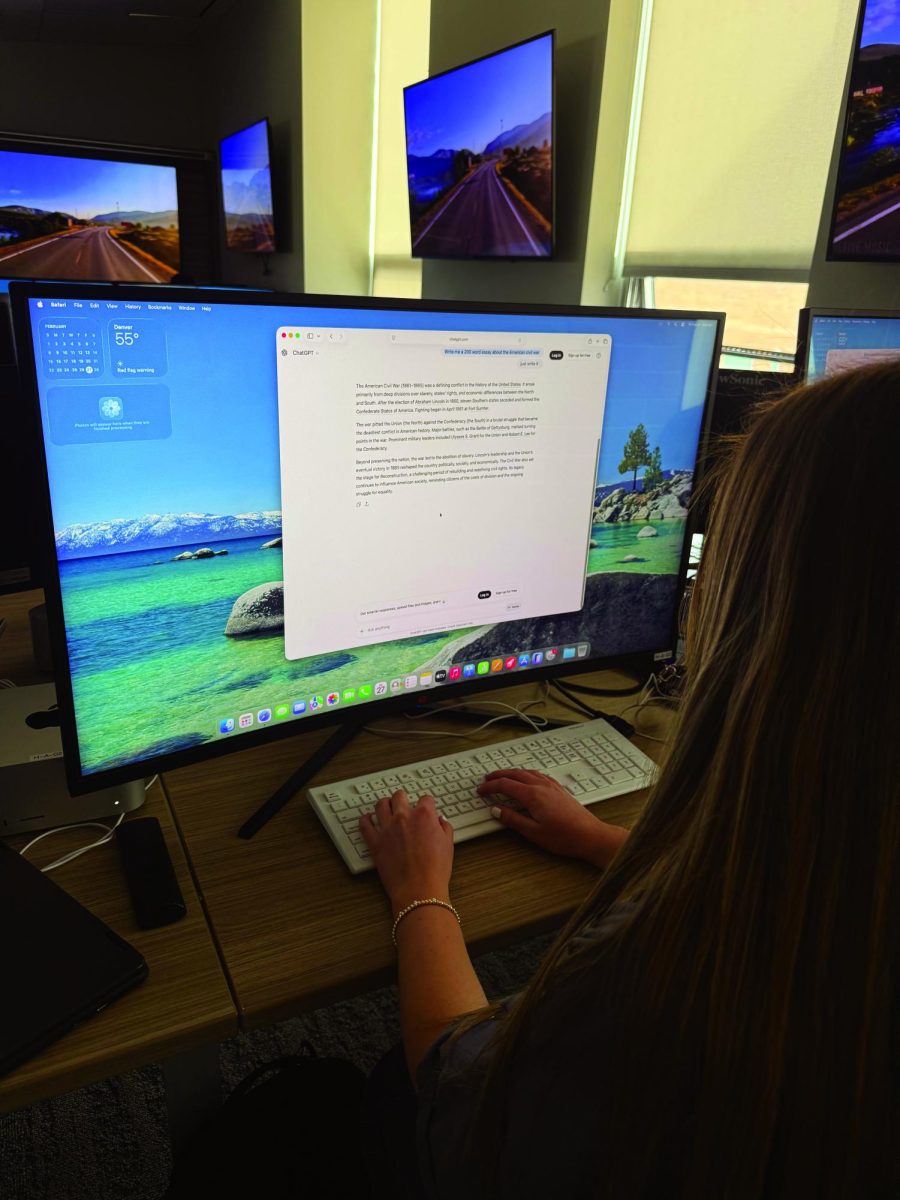
When artificial intelligence was added into the picture, it shifted cheating into an entirely new direction. AI is able to create original-looking answers in a matter of seconds. Students can see step-by-step math problems solved and even have an entire essay written based on the rubric they received from the teacher. AI is much harder to catch as it is not generated from just one source, and AI detectors are unreliable because students can slightly alter the information, making it nearly impossible to catch.
The impact of AI overall is much deeper than it seems, as it has forced teachers to doubt the academic integrity of every assignment submitted. Teachers have had to shift how they teach students because of this. According to Mr. Weigle, “[Teaching is] harder and less fulfilling. It’s made it where teachers’ main job is to decide if students are cheating, rather than actually teach and inspire.” For some teachers, they have found that eliminating online homework has helped with the issue because they can directly monitor students’ work while they are in class. “I used to be able to hand over technology as a tool for students to showcase what they know, and now it has replaced what they know with what a computer knows. I can’t rely on more creative technological projects to truly demonstrate what students can do,” said Mrs. Sorenson.
Eaton High School has faced the challenges of AI cheating like the rest of high schools across the world. It has impacted almost every teacher in the building, and made them change the way they are teaching in order to help students retain the information. For Mr. Weigle, he switched his predominantly computer-based classes to all on paper because he discovered that many of his students were using Google Lens. “I knew that we had to stop using the computers because [Google Lens] was an option, but then once we stopped using the computers, you could tell students that had very high averages immediately went to low averages, and that was a red flag,” said Wiegle. “I would have been able to catch them, but the screen monitoring program that is provided for us doesn’t work. Despite the fact that I made that clear, long before the problem with Google Lens, nothing was ever done about it. They, and we, paid the price.” Obviously disappointed with both his students and the school system, Weigle had to completely change the way he taught by shifting to paper. It takes him a significant longer time to grade now, but he has also discovered that students are learning more because they have to physically write it on paper. He feels more in touch with his students now, and can better tell when problems are very challenging.
The deeper issue that arises from the overuse of AI lies past schooling. If students rely on artificial intelligence to get them through their younger years of schooling all the way through college, it could hinder their understanding. Professionals that passed their schooling through cheating may not thoroughly understand the information required to successfully work their job. Cheating with AI has the power to change the world because it will continue to take over the jobs of humans who are blindly relying on it.
Some individuals defend the use of AI because it can walk students through answers step-by-step and teach them material. This creates the question of if AI is legitimate cheating because students can use it to better understand a topic. “I think it has its place in education, but it needs to be used sparingly and purposefully. I think there is a way to use it for brainstorming or to check your work, but we will have to roll back our use of technology in general,” said Sorenson. Nonetheless, AI has become an intricate part of the education system and it is going to continue to evolve. Education must evolve too, but the world is waiting to see what the balance between the two will look like in the future.