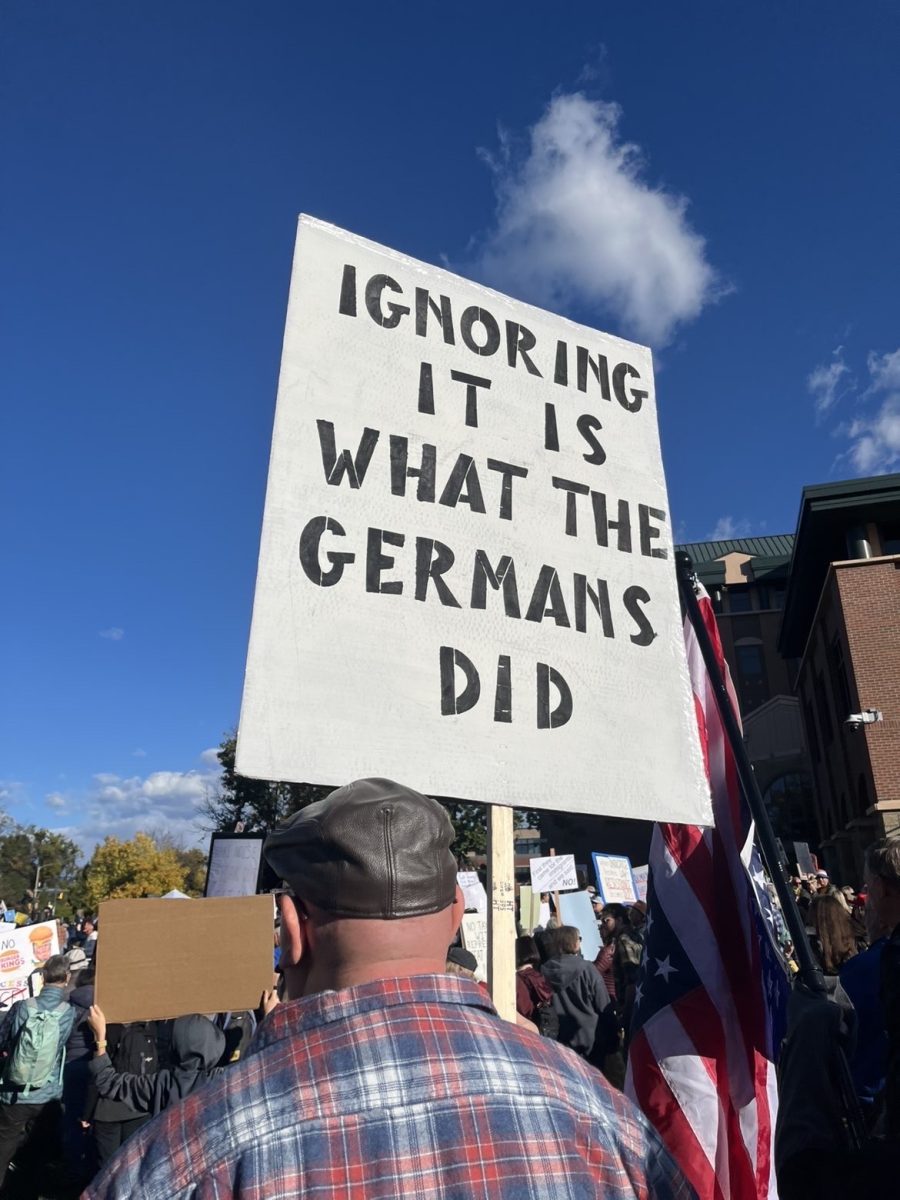
Crowds filled city streets across the country on Saturday, Oct. 18, carrying cardboard crowns with red slashes through them and chanting the same refrain: “No kings, no crowns, just democracy.” The demonstrations – organized by the coalition No Kings, a network of progressive groups-marked one of the largest protest waves since President Donald Trump’s return to office. Organizers estimated that roughly 2,600 protests took place across nearly every state, drawing more than five million participants nationwide. The movement gained momentum earlier in the week after Trump posted on Truth Social, celebrating his administration’s decision to kill New York City’s congestion pricing plan, writing, “LONG LIVE THE KING!” The White House later recirculated the message – complete with a digitally edited image of Trump wearing a gold crown. For many Americans, that post became the final spark in a growing fire of frustration. At the Denver rally, former state Rep. Joe Salazar captured the mood of the crowd: “There is no king in America, and we will not be silenced by authoritarians,” he declared, drawing loud applause from protesters gathered on the steps of the state Capitol. His words echoed the sentiment of demonstrators nationwide who accused President Trump of acting more like a monarch than an elected leader.
A Pattern of Expanding Power
Saturday’s protests come amid growing alarm over Trump’s continued efforts to test – and at times ignore – constitutional limits. His recent comments about flag burning underscore that trend. As MSNBC’s Steve Benen reported, Trump signed an executive order calling for the prosecution of those who burn the American flag, despite the Supreme Court having long upheld such acts as protected speech under the First Amendment. Trump went so far as to declare that violators should face “one year in jail – no early exits, no nothing.” When pressed on the matter, Trump told a White House roundtable, “We took the freedom of speech away, because that’s been through the courts.” Constitutional experts quickly noted that no president can unilaterally “take away” free speech or override a Supreme Court precedent with a nonbinding directive. “Such edicts might be common in authoritarian nations,” Benen wrote, “but this isn’t how the United States works.” The contradiction between Trump’s statements and constitutional law reflects what many protesters called “royal behavior” – leadership driven by personal decree rather than democratic process.
Submission Averted via Protest Signs
At the Washington, D.C., rally, Senator Bernie Sanders was recorded telling the crowd, “Democracy vanishes through time, but it dies when citizens choose to remain silent.” In San Francisco, demonstrators formed a massive human banner on Ocean Beach spelling out NO KINGS visible from above. Even in smaller towns, homemade signs carried raw, personal messages: “Stop Using My God to Promote Your Hate” and “We Didn’t Fight a Revolution for This.” For many, these displays were not just political – they were historical.
A Royal Parallel: Marie Antoinette and the Dangers of Hubris
The “No King” movement draws heavily on royal symbolism to connect the present moment with the cautionary tales of history. Protesters often liken Trump’s behavior to that of Marie Antoinette during pre-revolutionary France — a ruler remembered, fairly or not, for her detachment from the suffering of her people. The story goes that when told the peasants had no bread, she replied, “Let them eat cake.” Though apocryphal, the phrase endures as a symbol of arrogance and disconnect.
Protesters say Trump’s self-crowning imagery and disregard for dissent evoke that same dangerous sense of entitlement. “The flag doesn’t belong to Donald Trump. It belongs to us,” said one organizer at the Denver rally. “We’re not watching history happen. We’re making it.” The message underscored the growing conviction among demonstrators that their resistance represents not just opposition to one man, but a defense of democratic identity itself (Axios Boulder, “Thousands Gather Across Colorado for ‘No Kings’ Rallies,” October 18, 2025).
“He presents himself as a ruler while American workers face job losses, inflation, and declining public trust,” another protester added. The French monarchy’s downfall serves as a stark reminder that unchecked power always meets resistance. Marie Antoinette’s execution marked not just the fall of a dynasty, but a warning to leaders who mistake authority for immunity. Trump’s metaphorical crown, they argue, may one day become too heavy to bear.
The Fight for Democracy
Recent polling from the Pew Research Center shows that while many Americans have grown desensitized to Trump’s personal controversies, they remain sharply opposed to his attempts to expand presidential authority. The challenge for Democrats and activists now lies in transforming symbolic outrage into concrete political momentum. While character critiques divide voters, policies that restrict freedoms or erode institutions unite opposition. The crown – both literal in the protests and metaphorical in the presidency – has become the central symbol of resistance. Its weight represents not only the burden of unchecked ambition but also the people’s refusal to bow beneath it. As one protester in Denver put it, “The people make history – not the kings who think they can rewrite it.”