Books breathe the words too heavy for any tongue to carry. They inhale what we cannot say, and in their exhale the silence breaks. Authors – those solitary figures climbing ladders into dusk – stretch out their arms, reaching into the darkness where meaning waits. They return with fragments: trembling syllables, the fragile bones of a story.
Letters gather themselves, whirl and scatter, then take flight. They seize you by the hand, turn you upside down, inside out, until you cannot tell whether it is the page that speaks or the pulse in your chest.
This is not a trick. It is not sleight of hand. The enchantment is heavier than that, older. Knowledge arrives not as fact but as light, caught trembling in the glass jar of your mind, a firefly blinking once, then again, until the night itself learns to glow.
Absorbing literature is undoubtedly personal. Themes can be taught in classrooms, lessons can be shared broadly, but the inner shift – the transformation inside – is what ignites its lasting impact.
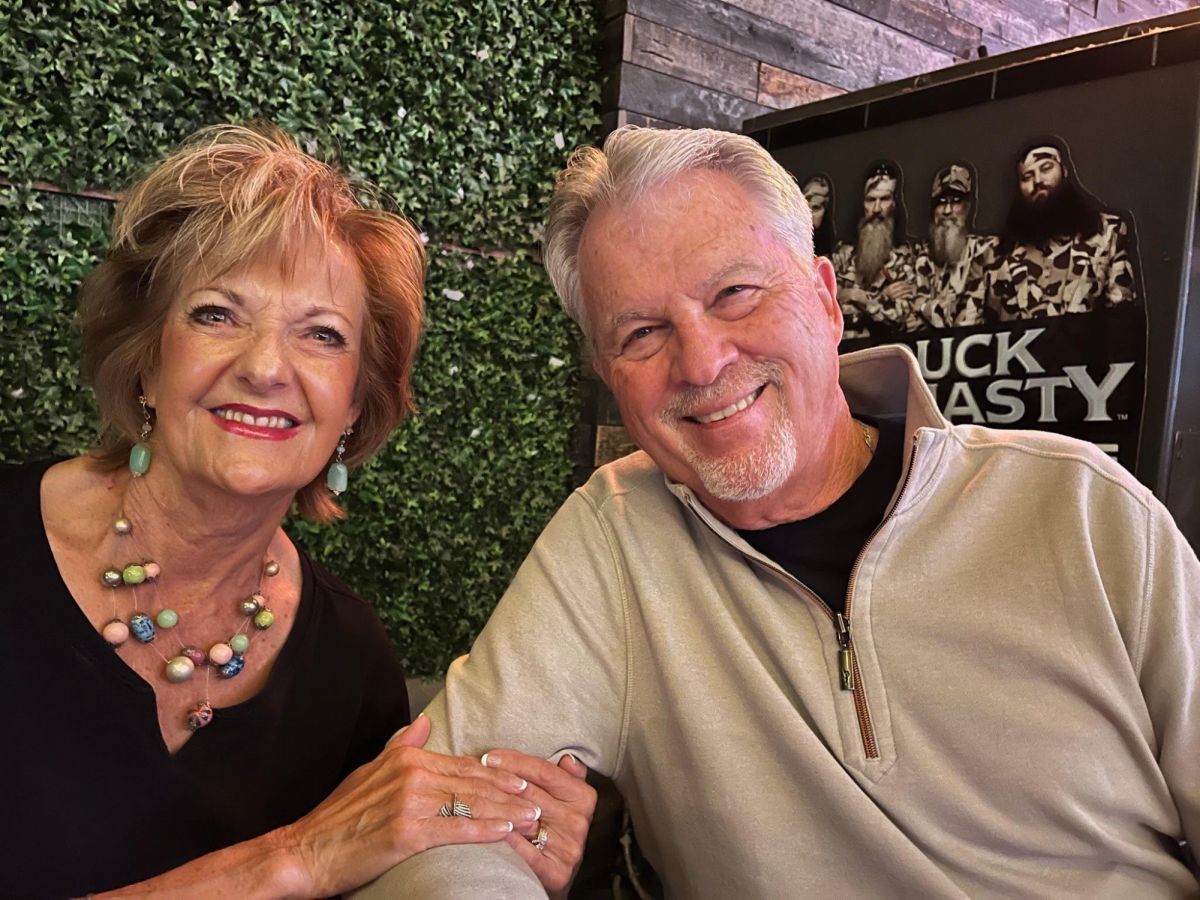
Michael Mazenko, Librarian at Eaton High School, is proof of that transformation. His life was swept up in a whirlwind of literature, shaken until the boundary between himself and the words blurred. His father, though he struggled with reading, filled their house with books. His mother was a writer, her pen etching a lineage that would run through him.
Mazenko went to college determined to study history. But one poetry class changed everything. In that room – among the voices of writers long gone – he also met the living voice of the woman who would become his wife. Literature stitched itself into his family’s fabric. Even his son’s name, Austin Twain, carries both Austen’s grace and Twain’s wit, as if inheritance itself could be bound in syllables.
When Mazenko speaks of literature’s weight, he doesn’t cite syllabi or statistics. Instead, he turns to the film Dead Poets Society:
“Science, law, engineering – these are noble pursuits and necessary to sustain life. But poetry, literature, love – these are what we stay alive for.”
“That is what art and literature do,” he adds. “It’s not about sustaining life; it’s the reason we live. Beauty.”
For him, literature is breath and pulse – it is what remains after the book closes. It shapes who we fall in love with, what we name our children, how we endure. Listening to him, you feel again the firefly in the jar, its light refusing to fade.
Mazenko delves into another perspective, the change that literature can evoke. Take a large issue like slavery… Many in the North “knew” about slavery before the Civil War, it was Uncle Tom’s Cabin that made it real. “Hearing about an issue isn’t the same as understanding it, empathizing with it, and seeing it through the lens of a human,” Makenko says.
Derek Weigle, a math teacher at Eaton High School, describes literature in similar terms, but for him, it is the humanizing power of stories that lingers. Childhood fables like The Tortoise and the Hare prove that simple lines can hold abundant meaning. Later, in works like Ray Bradbury’s Fahrenheit 451 and George Orwell’s Animal Farm, allegory transforms abstract politics into felt truth. Orwell’s famous line – “All animals are equal, but some animals are more equal than others” – shows how fiction makes power visible.
Literature also binds us through a shared language. Weigle points to Shakespeare’s Julius Caesar:
“There is a tide in the affairs of men, / Which, taken at the flood, leads on to fortune.”
The idea could be simplified to “Now is the time.” But in Shakespeare’s phrasing, the urgency becomes unforgettable.
Weigle himself holds close a very different book – Ayn Rand’s Atlas Shrugged. He has returned to it countless times, drawing more from each reading. Its impact on him is undeniable.
Literature remakes the body – it alters the weight of your breathing, the cadence of one’s steps. A book is not merely read; it is carried, lodged within.
For Liam Duncan, a language arts teacher at Eaton High School, the spark was ignited by The Great Gatsby. He still remembers closing the book in awe. “It was just so beautiful,” he recalls. His passion for English has been burning ever since.
Each of these teachers – Mazenko, Weigle, Duncan – carries a story shaped by literature. Their lives prove that books are not static objects on a shelf. They move us, bind us, remake us. They are fireflies, lighting the dark, one blink at a time.